It’s WEdnesday, readers, and I’m back at my desk in my adopted hometown of Philadelphia after meeting with a small team in a very big building. “440,” as some of my teacher friends call it, houses the headquarters of the School District of Philadelphia–and it is really big: almost a whole city block, four blocks up Broad from City Hall. I had to hustle (and got a little sweaty) to get a meeting with the District’s sustainability team. It was one in a series this fall intended to help My Climate Story do an informal SWOT (Strengths, Weaknesses, Opportunities, Threats) analysis of climate education in our region. The District serves nearly 200,000 students who attend many different kinds of schools. But, as the team explained to MCS research intern, Zey Oral and me, every school can become a green school.


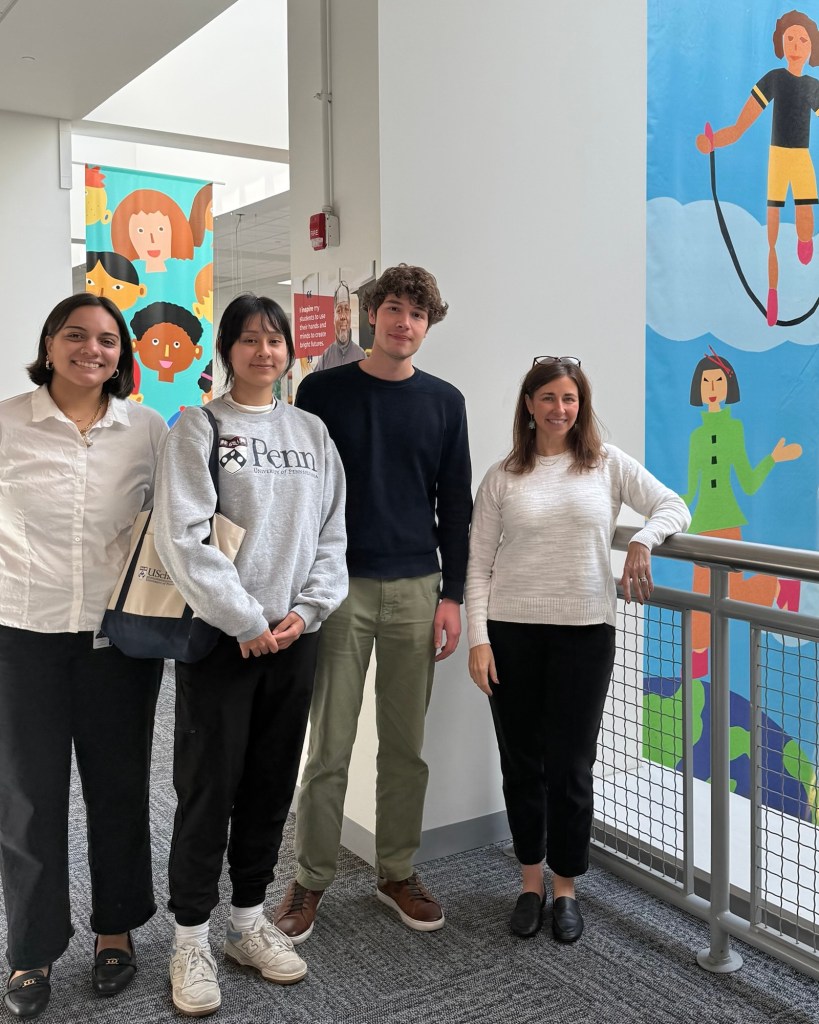
Led by Megan Garner, the team is building on their successes implementing Education for Sustainability through GreenFutures, their plan to “provide each student in Philadelphia with a green, healthy, high-performance school.” Now they’re working away to draft GreenFutures 2.0. Now, like when they wrote 1.0 and published it a decade ago, their approach is rooted in the Eco-Schools program developed by the National Wildlife Federation with support from the global Foundation for Environmental Education. In the vortex created when severe climate impacts collide with a general failure of public leadership for climate and ecoliteracy, this team is swimming on.
We talked about various ways their work involves climate storytellling, and how MCS might support their work. I talked about the pleasure and power of working with high school teachers and their students to produce a Philadelphia climate storytelling phestival. Megan shared her hopes for co-developing a climate story booth, a dream that My Climate Story intern Faith Bochert made real a few years ago 🙂 With help from the high school students who steer the District’s Sustainability Summit and Student Expo, we all hope the MCS booth will roll again this spring. The work by the District’s sustainability team has earned accolades, and it was a thrill to see how, in partnership with PHENND (whose team I got to meet in September!), that the team behind Greenworks is growing. Their work deserves a whole lot more support.
When students and I started MCS, we wanted to help students and lifelong learners learn to connect global climate change with local, even personal, climate impacts. We’re closing in on a hundred (always free) workshops, all designed for crafting personal (and science-based) climate stories. At the time, I was personally heartily sick of climate communicators’ insistence on “hope,” which felt unserious and really just cruel. It leaves me feeling stuck, just hopeless if I’m honest. (And it’s not just climate communication either; a lot of literary climate writing feels similarly stuck, as Heather Houser and Dana Luciano explain.)
But I think if you have kin–whether they’re human relatives or oddkin, biological kids or students–it’s hard to walk away. In the words of Dr. Constance Clayton, the District’s first African American woman Superintendent, “the Children come first.” And, in a crisis, it’s especially helpful to have a big kinship network, what Kate Rigby calls “multispecies conviviality.”

So that’s why we’re starting this new chapter in My Climate Story. The journey toward a new climate story is no doubt chaotic and more than a little bit sweaty, even as the unbearable temps of summer give way. As I run from one meeting to another this fall semester, I’m also often returning to Jennie Stephens’s work and the climate justice university. I resonate more with what I hear as anger on behalf of her students rather than the “hope” in her book’s subtitle. I recently signed up for the Climate Justice Universities Union, a real lighhouse, I think: a beacon for universities to stand up for (climate) civics and get “unstuck” from business as usual. Stories of hope ring false. Let’s see what stories full of the righteous anger that is fueled by love can do. What kinds of architecture will they enable? Are they (merely) utopian? Maybe. Although maybe that’s not such a bad thing. After all, we are here in Philadelphia, the city of brotherly (and sisterly) love.

